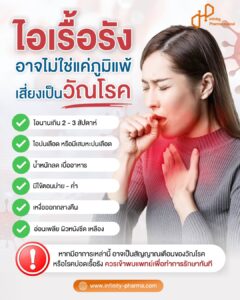

ไอเรื้อรัง อาจไม่ใช่แค่ภูมิแพ้

Persistent Cough? It Could Be TB

ไอเรื้อรัง…อาจไม่ใช่แค่ภูมิแพ้ แต่อาจเป็นสัญญาณของวัณโรค

อาการไอเป็นหนึ่งในอาการที่พบได้บ่อย หลายคนอาจคิดว่าเกิดจากภูมิแพ้ อากาศเปลี่ยนแปลง หรือการติดเชื้อทั่วไป แต่หากมีอาการไอต่อเนื่องเป็นเวลานานโดยไม่หาย ควรได้รับการตรวจวินิจฉัยเพิ่มเติม เนื่องจากอาจเป็นสัญญาณของ “วัณโรคปอด” ได้

🔹วัณโรคคืออะไร?

วัณโรค (Tuberculosis หรือ TB) เป็นโรคติดเชื้อที่เกิดจากแบคทีเรีย Mycobacterium tuberculosis โดยมักพบการติดเชื้อที่ปอดเป็นหลัก และสามารถแพร่กระจายจากคนสู่คนผ่านละอองฝอยในอากาศจากการไอ จาม หรือพูดคุย

🔹อาการที่ควรเฝ้าระวัง

หากมีอาการต่อไปนี้ ควรเข้ารับการตรวจเพิ่มเติม

  • ไอต่อเนื่องนานกว่า 2–3 สัปดาห์
  • ไอมีเสมหะ หรือมีเลือดปนในเสมหะ
  • น้ำหนักลดโดยไม่ทราบสาเหตุ
  • เบื่ออาหาร
  • มีไข้ต่ำ ๆ โดยเฉพาะช่วงบ่ายหรือเย็น
  • เหงื่อออกมากผิดปกติในเวลากลางคืน
  • อ่อนเพลีย เหนื่อยง่าย ซีด หรือรู้สึกไม่สดชื่น

🔹ใครบ้างที่มีความเสี่ยง?

  • ผู้ที่อาศัยหรือทำงานใกล้ชิดกับผู้ป่วยวัณโรค
  • ผู้ที่มีภูมิคุ้มกันต่ำ
  • ผู้สูงอายุ
  • ผู้ที่มีโรคประจำตัวบางชนิด เช่น เบาหวาน หรือโรคปอดเรื้อรัง
  • ผู้สูบบุหรี่เป็นประจำ

🔹วัณโรครักษาหายได้ หากตรวจพบตั้งแต่ระยะเริ่มต้น

ปัจจุบันวัณโรคสามารถรักษาให้หายขาดได้ด้วยการรับประทานยาตามคำแนะนำของแพทย์อย่างต่อเนื่องและครบตามระยะเวลา การตรวจพบโรคตั้งแต่เนิ่น ๆ ไม่เพียงช่วยเพิ่มโอกาสในการรักษา แต่ยังช่วยลดการแพร่กระจายเชื้อสู่คนรอบข้างได้อีกด้วย

อย่ามองข้ามอาการไอเรื้อรัง

หากคุณมีอาการไอนานเกิน 2–3 สัปดาห์ หรือมีอาการผิดปกติร่วมกับอาการไอ ควรเข้ารับการตรวจวินิจฉัยจากแพทย์ เพื่อค้นหาสาเหตุและรับการรักษาที่เหมาะสมโดยเร็วที่สุด

A Persistent Cough May Not Be Just Allergies — It Could Be a Sign of Tuberculosis

A persistent cough is one of the most common symptoms people experience. Many assume it is caused by allergies, changing weather, or a common respiratory infection. However, if a cough continues for an extended period without improvement, it is important to seek medical evaluation, as it may be a sign of pulmonary tuberculosis (TB).

What Is Tuberculosis?

Tuberculosis (TB) is an infectious disease caused by the bacterium Mycobacterium tuberculosis. It most commonly affects the lungs and can spread from person to person through airborne droplets released when an infected individual coughs, sneezes, or speaks.

Warning Signs and Symptoms

If you experience any of the following symptoms, medical evaluation is recommended:

  • A cough lasting longer than 2–3 weeks
  • Cough with sputum or blood-streaked sputum
  • Unexplained weight loss
  • Loss of appetite
  • Low-grade fever, especially in the afternoon or evening
  • Excessive night sweats
  • Fatigue, weakness, or feeling unusually tired

Who Is at Higher Risk?

Certain groups are at increased risk of developing tuberculosis, including:

  • Individuals who live or work in close contact with someone who has TB
  • People with weakened immune systems
  • Older adults
  • Individuals with chronic medical conditions, such as diabetes or chronic lung disease
  • Regular smokers

Tuberculosis Is Curable When Detected Early

Today, tuberculosis can be successfully treated with appropriate medications taken consistently and for the full duration prescribed by a physician. Early diagnosis not only improves treatment outcomes but also helps prevent the spread of infection to others.

Do Not Ignore a Persistent Cough

If you have been coughing for more than 2–3 weeks or have other concerning symptoms along with your cough, consult a healthcare professional for proper evaluation. Early diagnosis and treatment can make a significant difference in both recovery and disease prevention.