
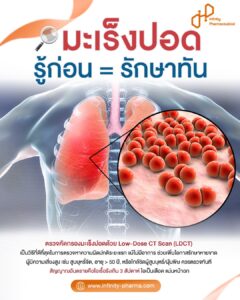
มะเร็งปอด รู้ก่อน = รักษาทัน
Lung Cancer: Detect Early, Treat Early
-
 Infinity Pharmaceutical
- Blog
มะเร็งปอด รู้ก่อน = รักษาทัน ตรวจพบเร็ว เพิ่มโอกาสในการรักษา
 มะเร็งปอด ภัยเงียบที่อาจไม่แสดงอาการในระยะแรก
มะเร็งปอดเป็นหนึ่งในโรคมะเร็งที่พบได้บ่อยและเป็นสาเหตุการเสียชีวิตอันดับต้น ๆ ของโลก เนื่องจากในระยะแรกของโรค ผู้ป่วยจำนวนมากมักไม่มีอาการผิดปกติ ทำให้หลายคนไม่ทราบว่าตนเองกำลังมีความผิดปกติในปอด
เมื่อเริ่มมีอาการ โรคอาจเข้าสู่ระยะที่ลุกลามแล้ว ส่งผลให้การรักษามีความซับซ้อนมากขึ้น ดังนั้นการตรวจคัดกรองจึงมีบทบาทสำคัญในการค้นหาความผิดปกติตั้งแต่ระยะเริ่มต้น
การตรวจคัดกรองมะเร็งปอดด้วย Low-Dose CT Scan (LDCT)
Low-Dose CT Scan (LDCT) เป็นการตรวจเอกซเรย์คอมพิวเตอร์ปอดด้วยปริมาณรังสีต่ำ ช่วยให้แพทย์สามารถตรวจพบก้อนหรือความผิดปกติขนาดเล็กในปอดได้ตั้งแต่ระยะเริ่มต้น แม้ผู้ป่วยจะยังไม่มีอาการใด ๆ
ข้อดีของการตรวจ LDCT
- ตรวจพบมะเร็งปอดได้ในระยะเริ่มต้น
- เพิ่มโอกาสในการรักษาและการหายขาด
- ใช้เวลาในการตรวจไม่นาน
- ไม่เจ็บและไม่ต้องพักฟื้น
- ช่วยวางแผนการรักษาได้อย่างรวดเร็วหากพบความผิดปกติ
การตรวจพบมะเร็งปอดตั้งแต่ระยะเริ่มต้น สามารถช่วยเพิ่มโอกาสในการรักษาให้มีประสิทธิภาพมากขึ้น และลดความเสี่ยงจากการลุกลามของโรค
ใครบ้างที่ควรเข้ารับการตรวจคัดกรองมะเร็งปอด
การตรวจ LDCT เหมาะสำหรับผู้ที่มีความเสี่ยงต่อการเกิดมะเร็งปอด โดยเฉพาะกลุ่มต่อไปนี้
กลุ่มเสี่ยงที่ควรพิจารณาตรวจ
- ผู้ที่สูบบุหรี่เป็นประจำ หรือเคยสูบบุหรี่ในอดีต
- ผู้ที่มีอายุ 50 ปีขึ้นไป
- ผู้ที่ได้รับควันบุหรี่มือสองเป็นประจำ
- ผู้ที่ทำงานหรืออาศัยอยู่ในพื้นที่ที่มีมลภาวะทางอากาศสูง
- ผู้ที่มีประวัติคนในครอบครัวเป็นมะเร็งปอด
- ผู้ที่มีโรคปอดเรื้อรังหรือมีปัจจัยเสี่ยงอื่น ๆ ตามดุลยพินิจของแพทย์
สัญญาณเตือนของมะเร็งปอดที่ไม่ควรมองข้าม
แม้มะเร็งปอดในระยะแรกอาจไม่มีอาการ แต่หากพบอาการต่อไปนี้ ควรรีบปรึกษาแพทย์เพื่อรับการตรวจวินิจฉัยเพิ่มเติม
อาการที่ควรเฝ้าระวัง
- ไอเรื้อรังนานกว่า 3 สัปดาห์
- ไอมีเลือดปน
- เจ็บหน้าอกหรือแน่นหน้าอก
- หายใจลำบาก เหนื่อยง่ายผิดปกติ
- เสียงแหบเรื้อรัง
- น้ำหนักลดโดยไม่ทราบสาเหตุ
- เบื่ออาหาร อ่อนเพลีย
การตรวจเร็ว ช่วยเพิ่มโอกาสในการรักษา
มะเร็งปอดเป็นโรคที่สามารถรักษาได้ โดยเฉพาะเมื่อพบในระยะเริ่มต้น การตรวจคัดกรองอย่างเหมาะสมในกลุ่มเสี่ยงจึงเป็นอีกหนึ่งวิธีสำคัญในการดูแลสุขภาพ
หากคุณมีปัจจัยเสี่ยง หรือมีอาการที่น่าสงสัย อย่ารอให้โรคแสดงอาการชัดเจน การเข้ารับการตรวจคัดกรองตั้งแต่วันนี้ อาจเป็นก้าวสำคัญที่ช่วยให้ตรวจพบโรคได้เร็วขึ้น และเพิ่มโอกาสในการรักษาอย่างมีประสิทธิภาพในอนาคต
มะเร็งปอด รู้ก่อน ตรวจก่อน รักษาได้ทัน 💙
Lung Cancer: Early Detection Means Better Treatment Outcomes
Detect Early. Treat Early. Improve Your Chances of Recovery.
Lung cancer is often called a “silent disease” because it may not cause noticeable symptoms in its early stages.
It is one of the most common cancers worldwide and remains a leading cause of cancer-related deaths. Many patients experience no symptoms during the early stages of the disease, making it difficult to detect without appropriate screening.
By the time symptoms develop, the cancer may have already progressed to a more advanced stage, making treatment more challenging. This is why lung cancer screening plays a crucial role in detecting abnormalities early and improving treatment outcomes.
Lung Cancer Screening with Low-Dose CT Scan (LDCT)
A Low-Dose CT Scan (LDCT) is a specialized imaging test that uses a lower dose of radiation than a conventional CT scan to examine the lungs.
LDCT can help detect small lung nodules or abnormalities at an early stage, even before symptoms appear.
Benefits of LDCT Screening
- Detects lung cancer at an early stage
- Increases the chances of successful treatment and cure
- Quick and convenient procedure
- Non-invasive and painless
- No recovery time required
- Allows timely treatment planning if abnormalities are found
Early detection can significantly improve treatment effectiveness and reduce the risk of disease progression.
Who Should Consider Lung Cancer Screening?
LDCT screening is particularly recommended for individuals who are at higher risk of developing lung cancer.
High-Risk Groups Include:
- Current smokers
- Former smokers
- Adults aged 50 years and older
- Individuals regularly exposed to secondhand smoke
- People living or working in areas with high levels of air pollution
- Individuals with a family history of lung cancer
- Those with chronic lung diseases or other risk factors, as determined by a physician
Warning Signs of Lung Cancer
Although early-stage lung cancer may not cause symptoms, the following signs should not be ignored:
Symptoms That Require Medical Attention
- Persistent cough lasting more than 3 weeks
- Coughing up blood
- Chest pain or chest tightness
- Shortness of breath
- Unusual fatigue or reduced exercise tolerance
- Persistent hoarseness
- Unexplained weight loss
- Loss of appetite
- General weakness or fatigue
Early Screening Can Save Lives
Lung cancer is often more treatable when detected early. Appropriate screening for individuals at risk is one of the most effective ways to protect lung health and improve long-term outcomes.
If you have risk factors or experience any concerning symptoms, do not wait until the disease progresses. Early screening may help detect lung cancer sooner, allowing for more effective treatment and a better chance of recovery.
Lung Cancer: Know Early. Screen Early. Treat Early. 💙