
มะเร็งปอดระยะต้น VS ระยะลุกลาม ต่างกันอย่างไร?
Early-Stage vs Advanced Lung Cancer: What's the Difference?
-
Infinity Pharmaceutical
- Blog
มะเร็งปอดระยะต้น VS ระยะลุกลาม ต่างกันอย่างไร? ทำไมการตรวจคัดกรองจึงสำคัญ
มะเร็งปอดเป็นหนึ่งในโรคมะเร็งที่พบได้บ่อยและเป็นสาเหตุการเสียชีวิตอันดับต้น ๆ ของโลก สิ่งที่หลายคนอาจไม่ทราบคือ มะเร็งปอดในระยะเริ่มต้นมักไม่แสดงอาการที่ชัดเจน ทำให้ผู้ป่วยจำนวนไม่น้อยทราบว่าตนเองเป็นโรคเมื่อมะเร็งเข้าสู่ระยะลุกลามแล้ว
ด้วยเหตุนี้ การตรวจคัดกรองและการสังเกตความผิดปกติของร่างกายจึงมีความสำคัญอย่างมาก เพราะยิ่งตรวจพบโรคได้เร็ว โอกาสในการรักษาและควบคุมโรคก็ยิ่งสูงขึ้น
มะเร็งปอดระยะต้น (Early-Stage Lung Cancer)
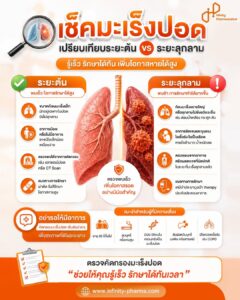
มะเร็งปอดระยะต้น คือ ระยะที่ก้อนมะเร็งยังมีขนาดเล็กและยังจำกัดอยู่ภายในปอด หรือยังไม่กระจายไปยังอวัยวะสำคัญอื่นของร่างกาย
ลักษณะสำคัญของมะเร็งปอดระยะต้น
- ก้อนมะเร็งมีขนาดเล็ก
- ยังไม่แพร่กระจายไปยังอวัยวะอื่น
- ผู้ป่วยส่วนใหญ่มักไม่มีอาการ
- บางรายอาจมีอาการไอเล็กน้อย เหนื่อยง่าย หรือรู้สึกไม่สบายโดยไม่ทราบสาเหตุ
วิธีการตรวจพบ
เนื่องจากมะเร็งปอดระยะต้นมักไม่แสดงอาการ จึงมักตรวจพบจากการตรวจสุขภาพหรือการตรวจคัดกรอง เช่น
- เอกซเรย์ปอด (Chest X-ray)
- เอกซเรย์คอมพิวเตอร์ปริมาณรังสีต่ำ (Low-Dose CT Scan หรือ LDCT)
แนวทางการรักษา
หากตรวจพบตั้งแต่ระยะเริ่มต้น แพทย์อาจพิจารณาการรักษาด้วย
- การผ่าตัดนำก้อนมะเร็งออก
- การฉายรังสีรักษา
- การรักษาเฉพาะทางอื่น ๆ ตามดุลยพินิจของแพทย์
โดยทั่วไป ผู้ป่วยที่ได้รับการวินิจฉัยในระยะต้นจะมีโอกาสรักษาและควบคุมโรคได้ดีกว่าระยะลุกลามอย่างมีนัยสำคัญ
มะเร็งปอดระยะลุกลาม (Advanced Lung Cancer)
มะเร็งปอดระยะลุกลาม คือ ระยะที่ก้อนมะเร็งมีขนาดใหญ่ขึ้น หรือมีการแพร่กระจายไปยังต่อมน้ำเหลืองและอวัยวะอื่นของร่างกาย เช่น สมอง ตับ หรือกระดูก
อาการที่อาจพบได้
- ไอเรื้อรังเป็นเวลานาน
- ไอมีเลือดปน
- หายใจลำบาก
- เจ็บหน้าอก
- เหนื่อยง่ายผิดปกติ
- น้ำหนักลดโดยไม่ทราบสาเหตุ
- เบื่ออาหาร
- ปวดกระดูก หรือมีอาการทางระบบประสาทในกรณีที่มะเร็งแพร่กระจาย
แนวทางการรักษา
เมื่อโรคอยู่ในระยะลุกลาม การรักษามักมีความซับซ้อนมากขึ้น โดยอาจใช้หลายวิธีร่วมกัน เช่น
- เคมีบำบัด (Chemotherapy)
- ยามุ่งเป้า (Targeted Therapy)
- ภูมิคุ้มกันบำบัด (Immunotherapy)
- รังสีรักษา
- การรักษาแบบประคับประคองเพื่อบรรเทาอาการและเพิ่มคุณภาพชีวิต
ใครบ้างที่ควรให้ความสำคัญกับการตรวจคัดกรองมะเร็งปอด?
แม้จะไม่มีอาการ แต่บุคคลที่มีปัจจัยเสี่ยงต่อไปนี้ควรปรึกษาแพทย์เกี่ยวกับการตรวจคัดกรอง
- ผู้ที่สูบบุหรี่หรือเคยสูบบุหรี่เป็นเวลานาน
- ผู้ที่ได้รับควันบุหรี่มือสองเป็นประจำ
- ผู้ที่อาศัยหรือทำงานในพื้นที่ที่มีมลภาวะทางอากาศสูง
- ผู้ที่สัมผัสสารเคมีหรือฝุ่นอันตรายในที่ทำงาน
- ผู้ที่มีประวัติคนในครอบครัวเป็นมะเร็งปอด
- ผู้ที่มีโรคปอดเรื้อรังบางชนิด
สรุป
สิ่งสำคัญที่ควรทราบคือ มะเร็งปอดระยะต้นอาจไม่มีอาการเตือนใด ๆ เลย ดังนั้นการรอให้เกิดอาการไอเรื้อรัง ไอเป็นเลือด หรือหายใจลำบากก่อนเข้ารับการตรวจ อาจทำให้พลาดโอกาสในการพบโรคตั้งแต่ระยะเริ่มต้น
การตรวจคัดกรองที่เหมาะสม โดยเฉพาะในกลุ่มเสี่ยง สามารถช่วยให้ตรวจพบความผิดปกติได้เร็วขึ้น เพิ่มโอกาสในการรักษา และช่วยให้ผู้ป่วยมีคุณภาพชีวิตที่ดีในระยะยาว
อย่ารอให้มีอาการแล้วค่อยตรวจ เพราะการตรวจพบเร็ว อาจเป็นกุญแจสำคัญสู่การรักษาที่มีประสิทธิภาพมากขึ้น
Lung cancer is one of the most common cancers worldwide and remains a leading cause of cancer-related deaths. What many people may not realize is that lung cancer in its early stages often causes no obvious symptoms. As a result, many patients are diagnosed only after the disease has progressed to an advanced stage.
For this reason, regular screening and awareness of potential risk factors are extremely important. The earlier lung cancer is detected, the greater the chances of successful treatment and long-term disease control.
Early-Stage Lung Cancer
Early-stage lung cancer refers to cancer that is still confined to the lungs and has not spread extensively to other parts of the body.
Key Characteristics
- The tumor is relatively small.
- Cancer remains localized within the lung.
- There is little or no spread to distant organs.
- Most patients experience no noticeable symptoms.
- Some individuals may have mild symptoms such as occasional coughing, fatigue, or general discomfort.
How It Is Detected
Because early-stage lung cancer often develops without symptoms, it is commonly discovered during routine health examinations or screening tests, such as:
- Chest X-ray
- Low-Dose Computed Tomography (LDCT) Scan
Treatment Options
When diagnosed at an early stage, treatment may include:
- Surgical removal of the tumor
- Radiation therapy
- Other specialized treatments recommended by a physician
In general, patients diagnosed in the early stages have significantly better treatment outcomes and survival rates compared with those diagnosed at more advanced stages.
Advanced Lung Cancer
Advanced lung cancer occurs when the tumor has grown larger or spread beyond the lungs to nearby lymph nodes or distant organs such as the brain, liver, or bones.
Common Symptoms
Patients with advanced lung cancer may experience:
- Persistent or chronic cough
- Coughing up blood
- Shortness of breath
- Chest pain
- Unusual fatigue
- Unexplained weight loss
- Loss of appetite
- Bone pain or neurological symptoms when cancer has spread to other organs
Treatment Options
Treatment for advanced lung cancer is often more complex and may involve a combination of therapies, including:
- Chemotherapy
- Targeted Therapy
- Immunotherapy
- Radiation Therapy
- Palliative Care to relieve symptoms and improve quality of life
Who Should Consider Lung Cancer Screening?
Even without symptoms, individuals with the following risk factors should discuss lung cancer screening with their healthcare provider:
- Current or former long-term smokers
- People regularly exposed to secondhand smoke
- Individuals living or working in areas with high levels of air pollution
- Workers exposed to hazardous chemicals or occupational dust
- Those with a family history of lung cancer
- Individuals with certain chronic lung diseases
Conclusion
One of the most important facts about lung cancer is that early-stage disease may cause no warning signs at all. Waiting until symptoms such as chronic cough, coughing up blood, or shortness of breath appear may mean missing the opportunity for early diagnosis.
Appropriate screening, especially for high-risk individuals, can help detect abnormalities sooner, increase treatment options, improve outcomes, and support a better quality of life.
Do not wait for symptoms before getting checked. Early detection may be the key to more effective treatment and better long-term health outcomes.