
ไม่สูบบุหรี่ ก็ยังมีความเสี่ยงเป็นมะเร็งปอดได้
You Don’t Have to Smoke to Be at Risk of Lung Cancer
-
Infinity Pharmaceutical
- Blog
หลายคนเข้าใจว่ามะเร็งปอดเป็นโรคที่เกิดจากการสูบบุหรี่เท่านั้น แต่ในความเป็นจริง ผู้ที่ไม่เคยสูบบุหรี่ก็สามารถเป็นมะเร็งปอดได้เช่นกัน เนื่องจากยังมีปัจจัยเสี่ยงอื่น ๆ ที่ส่งผลต่อสุขภาพปอดและเพิ่มโอกาสการเกิดโรคในระยะยาว
ในชีวิตประจำวัน เราอาจสัมผัสกับมลภาวะและสารก่อมะเร็งโดยไม่รู้ตัว ไม่ว่าจะเป็นฝุ่นละอองขนาดเล็ก PM2.5 สารเคมีในสิ่งแวดล้อม ก๊าซเรดอน หรือปัจจัยทางพันธุกรรม ซึ่งล้วนเป็นสาเหตุที่อาจเพิ่มความเสี่ยงต่อการเกิดมะเร็งปอดได้
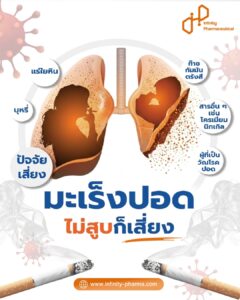
ปัจจัยเสี่ยงของมะเร็งปอดที่ไม่ควรมองข้าม
1. ฝุ่นละอองขนาดเล็ก PM2.5
ฝุ่น PM2.5 สามารถเข้าสู่ระบบทางเดินหายใจและปอดได้โดยตรง การสัมผัสเป็นเวลานานอาจส่งผลต่อการอักเสบของเนื้อเยื่อปอดและเพิ่มความเสี่ยงต่อโรคทางเดินหายใจ รวมถึงมะเร็งปอด
2. สารเคมีและมลพิษในสิ่งแวดล้อม
ผู้ที่อาศัยหรือทำงานในพื้นที่ที่มีมลพิษทางอากาศสูง หรือสัมผัสสารเคมีจากภาคอุตสาหกรรมเป็นประจำ อาจมีความเสี่ยงต่อการเกิดมะเร็งปอดมากขึ้น
3. แร่ใยหิน (Asbestos)
แร่ใยหินที่พบในวัสดุก่อสร้างบางชนิดเป็นสารที่ได้รับการยอมรับว่าเป็นปัจจัยเสี่ยงสำคัญของโรคปอดและมะเร็งปอด โดยเฉพาะในผู้ที่สัมผัสเป็นเวลานาน
4. ก๊าซเรดอน (Radon Gas)
ก๊าซเรดอนเป็นก๊าซกัมมันตรังสีที่เกิดขึ้นตามธรรมชาติ สามารถสะสมอยู่ภายในอาคารหรือพื้นที่ปิดได้ และเป็นหนึ่งในปัจจัยเสี่ยงของมะเร็งปอดในผู้ที่ไม่สูบบุหรี่
5. พันธุกรรมและโรคปอดเรื้อรัง
ผู้ที่มีประวัติคนในครอบครัวเป็นมะเร็งปอด หรือมีโรคปอดเรื้อรังบางชนิด อาจมีความเสี่ยงสูงกว่าคนทั่วไป และควรได้รับการดูแลสุขภาพปอดอย่างเหมาะสม
การป้องกันและการดูแลสุขภาพปอด
แม้ว่าจะไม่สามารถหลีกเลี่ยงปัจจัยเสี่ยงได้ทั้งหมด แต่การดูแลสุขภาพอย่างสม่ำเสมอ เช่น หลีกเลี่ยงมลพิษทางอากาศ สวมหน้ากากป้องกันฝุ่น PM2.5 ออกกำลังกายเป็นประจำ และเข้ารับการตรวจสุขภาพตามความเหมาะสม สามารถช่วยลดความเสี่ยงและเพิ่มโอกาสในการตรวจพบความผิดปกติได้ตั้งแต่ระยะเริ่มต้น
เพราะ “การรู้ทันความเสี่ยง” และการใส่ใจสุขภาพปอดตั้งแต่วันนี้ อาจเป็นก้าวสำคัญในการป้องกันโรคร้ายในอนาคต
Many people believe that lung cancer only occurs in smokers. In reality, individuals who have never smoked can also develop lung cancer due to a variety of other risk factors that may affect lung health over time.
In our daily lives, we may be exposed to air pollution and carcinogens without realizing it. Fine particulate matter (PM2.5), environmental chemicals, radon gas, and genetic factors are all potential contributors that may increase the risk of lung cancer.
Lung Cancer Risk Factors That Should Not Be Overlooked
1. Fine Particulate Matter (PM2.5)
PM2.5 particles are small enough to penetrate deep into the respiratory system and reach the lungs. Long-term exposure can lead to chronic inflammation of lung tissue and may increase the risk of respiratory diseases, including lung cancer.
2. Environmental Chemicals and Air Pollution
People who live or work in areas with high levels of air pollution or who are regularly exposed to industrial chemicals may have a higher risk of developing lung cancer.
3. Asbestos
Asbestos, which may be found in certain construction materials, is a well-established risk factor for lung diseases and lung cancer, especially among individuals with prolonged exposure.
4. Radon Gas
Radon is a naturally occurring radioactive gas that can accumulate inside buildings and enclosed spaces. It is recognized as one of the leading risk factors for lung cancer among non-smokers.
5. Genetics and Chronic Lung Diseases
Individuals with a family history of lung cancer or certain chronic lung conditions may face a higher risk than the general population and should pay close attention to their lung health.
Prevention and Lung Health Care
Although it is impossible to avoid all risk factors, adopting healthy habits can help reduce the risk of lung disease. These include:
- Limiting exposure to air pollution
- Wearing protective masks during periods of high PM2.5 levels
- Exercising regularly
- Attending routine health check-ups as recommended
Early detection can significantly improve treatment outcomes. Paying attention to lung health today may help prevent serious health problems in the future.
Because understanding the risks and taking proactive steps to protect your lungs today may be one of the most important investments in your long-term health.