
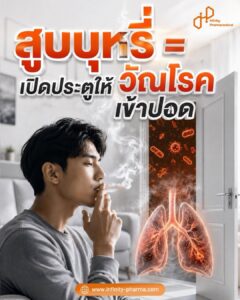
สูบบุหรี่ = เปิดประตูให้โรคเข้าปอด
Smoking: A Major Risk Factor for Lung Disease
-
Infinity Pharmaceutical
- Blog
การสูบบุหรี่เป็นหนึ่งในปัจจัยเสี่ยงสำคัญที่ส่งผลกระทบต่อสุขภาพปอดและระบบทางเดินหายใจโดยตรง ทุกครั้งที่สูบบุหรี่ ร่างกายจะได้รับสารเคมีอันตรายจำนวนมาก ซึ่งสามารถทำลายเนื้อเยื่อปอด ลดประสิทธิภาพการทำงานของระบบทางเดินหายใจ และเพิ่มความเสี่ยงต่อการเกิดโรคต่างๆ ในระยะยาว
หลายคนอาจคิดว่า หากยังไม่มีอาการไอ เหนื่อยง่าย หรือหายใจลำบาก ก็แสดงว่าปอดยังแข็งแรงดี แต่ในความเป็นจริง โรคปอดหลายชนิดสามารถค่อยๆ พัฒนาและสะสมความเสียหายภายในร่างกายโดยไม่แสดงอาการในระยะแรก ทำให้ผู้ป่วยจำนวนไม่น้อยมารู้ตัวเมื่อโรคลุกลามไปแล้ว
อันตรายจากการสูบบุหรี่ที่ส่งผลต่อปอด
การสูบบุหรี่สามารถเพิ่มความเสี่ยงต่อโรคและภาวะต่างๆ ได้ เช่น
- โรคปอดอุดกั้นเรื้อรัง (COPD)
- โรคถุงลมโป่งพอง
- โรคหลอดลมอักเสบเรื้อรัง
- การติดเชื้อในระบบทางเดินหายใจบ่อยครั้ง
- มะเร็งปอด
- สมรรถภาพปอดลดลง ทำให้เหนื่อยง่ายกว่าปกติ
นอกจากนี้ ควันบุหรี่ยังส่งผลต่อระบบภูมิคุ้มกัน ทำให้ร่างกายมีความสามารถในการกำจัดเชื้อโรคและสิ่งแปลกปลอมที่เข้าสู่ปอดลดลง ส่งผลให้เกิดการอักเสบและติดเชื้อได้ง่ายขึ้น
สัญญาณเตือนที่ไม่ควรมองข้าม
หากมีอาการต่อไปนี้ ควรรีบปรึกษาแพทย์เพื่อรับการตรวจวินิจฉัย
- ไอเรื้อรังติดต่อกันหลายสัปดาห์
- มีเสมหะเรื้อรังหรือเสมหะปนเลือด
- เหนื่อยง่ายผิดปกติ
- หายใจลำบาก หรือหายใจมีเสียงผิดปกติ
- เจ็บหน้าอกโดยไม่ทราบสาเหตุ
- น้ำหนักลดโดยไม่ตั้งใจ
อาการเหล่านี้อาจเป็นสัญญาณเตือนของโรคปอดที่ต้องได้รับการดูแลอย่างเหมาะสม
เลิกบุหรี่วันนี้ เพื่อปอดที่แข็งแรงในอนาคต
การเลิกบุหรี่เป็นวิธีที่มีประสิทธิภาพที่สุดในการลดความเสี่ยงของโรคปอดและโรคร้ายแรงอื่นๆ แม้ว่าจะสูบบุหรี่มาเป็นเวลานาน แต่เมื่อหยุดสูบ ร่างกายและปอดจะเริ่มกระบวนการฟื้นฟูตัวเองทันที และความเสี่ยงต่อโรคต่างๆ จะค่อยๆ ลดลงตามระยะเวลา
สุขภาพปอดที่ดีไม่ใช่เรื่องไกลตัว การดูแลปอดตั้งแต่วันนี้ ด้วยการหลีกเลี่ยงบุหรี่และเข้ารับการตรวจสุขภาพอย่างสม่ำเสมอ จะช่วยให้คุณมีคุณภาพชีวิตที่ดีและลดความเสี่ยงต่อโรคร้ายในอนาคต
เพราะสุขภาพปอดที่แข็งแรง เริ่มต้นได้จากการหยุดทำร้ายตัวเองตั้งแต่วันนี้
Smoking is one of the most significant risk factors affecting lung health and the respiratory system. Every time a person smokes, the body is exposed to numerous harmful chemicals that can damage lung tissue, reduce respiratory function, and increase the risk of developing serious diseases over time.
Many people assume that if they do not experience symptoms such as chronic coughing, shortness of breath, or fatigue, their lungs are still healthy. However, the reality is that many lung diseases can develop gradually and silently without noticeable symptoms in the early stages. As a result, many individuals only become aware of the problem when the disease has already progressed.
How Smoking Affects the Lungs
Smoking significantly increases the risk of various respiratory conditions, including:
- Chronic Obstructive Pulmonary Disease (COPD)
- Emphysema
- Chronic Bronchitis
- Frequent Respiratory Infections
- Lung Cancer
- Reduced Lung Function and Exercise Capacity
In addition, cigarette smoke weakens the immune system, reducing the body’s ability to remove harmful particles and fight infections within the lungs. This can lead to chronic inflammation and make respiratory infections more likely to occur.
Warning Signs You Should Not Ignore
If you experience any of the following symptoms, it is important to seek medical advice and undergo proper evaluation:
- A persistent cough lasting several weeks
- Chronic sputum production or coughing up blood
- Unusual shortness of breath
- Difficulty breathing or wheezing
- Unexplained chest pain
- Unintentional weight loss
These symptoms may be warning signs of underlying lung diseases that require prompt medical attention.
Quit Smoking Today for Healthier Lungs Tomorrow
Quitting smoking is the most effective way to reduce the risk of lung disease and many other serious health conditions. Even for long-term smokers, the body and lungs begin to repair themselves soon after smoking cessation, and the risk of disease gradually decreases over time.
Good lung health starts with healthy choices. Avoiding tobacco products and attending regular health check-ups can help protect your lungs, improve your quality of life, and reduce the risk of serious illnesses in the future.
Because healthy lungs begin with the decision to stop harming them today.